So, you want to record vocals and guitar? This brings us to Mics and Mixers and the possibility of going Mixerless


First the mixer approach

Most consumer soundcards either have no microphone preamps on the card or really bad ones designed for speech.  If you want to get sound from a microphone into your computer you need a way to amplify the mic signal cleanly.  This can be done with a mixer, or a mic preamp which plugs into the line in jack on your soundcard.  Ok!  I know you already have your keyboard plugged in.  Duh!  So you get a  mixer and you plug  the keyboard, guitar and the microphone into it.  A good mixer for recording will have a switch on each channel that lets your route that channel to the soundcard for recording.


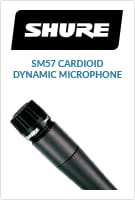
Shure SM57LC Cardioid Dynamic Microphone (Less Cable) Tweak:   Every pro studio has a couple of these around.  Why?  They record anything! Vocals, guitar cabs, drums, whatever.  It's solid and heavy compared to a cheap plastic Mic, and feels good to use. They are tough for road use, have an XLR (3 prong) connector that  reduces the hisses and hums that cheap mics have.  To connect this mic to your soundcard you will need a small mixer that accepts XLR plugs, or a Mic Preamp. Here's the cable
 
AKG Perception 220 Studio Condenser Microphone
GThe AKG Perception 220 Studio Condenser Microphone is a recent addition to the Perception line of quality microphones. If you have never had the chance to experience these mics, here's your chance. Perfect for countless applications, the Perception line is the secret weapon of thousands of studios worldwide.
Rode NT5 Condenser Microphones
The Rode NT5 is a condenser microphone specifically designed for instruments including guitar, saxophone, drums, violin, and many others. Its design allows for tight positioning where small mics are most useful. They come as a matched pair complete in a case with a stand mounts and windscreens.


More Mics, click me Mics for the Home Studio

Tweak: A better way to start because it has a separate recording bus that can send individual channels to soundcard. Be careful, the really small mixers cannot do this very well.

Behringer XENYX 1204 Mixer
The XENYX 1204 has 12 inputs and 2 Aux Sends for each channel. Additionally, 2 multi-functional stereo Aux Returns have been incorporated for routing flexibility. The new XENYX Mic Preamp matches the sound quality, transparency, headroom and even the dynamic range of boutique-style, stand-alone mic preamps. Neo-classic “British EQ” brings back the warmth and musicality of those ‘60s and ‘70s mega-console desks that made music history.

The recording bus is sometimes called the "alt 3-4 bus" or sometimes just the alt bus.

Yamaha MG124C Stereo Mixer

Read about Mixers Choosing a Mixer


Now the Mixer-less approach

Going Mixerless?  Then the Soundcard will not do.  You need an audio interface!  These have MORE inputs,  Some even have Mic preamps. The best way to record electric guitar is either to Mic your amp or connect a guitar processor to a line input (FX pedal, direct box, V-amp, Pod, etc.)
Emu 1616M PCI Digital Audio System
E-MU's new 1616M PCI Digital Audio System delivers everything you need to produce audio on a PC with professional results -- 24-bit/192kHz converters (the same A/D converters used in Digidesign's ProTools HD 192 I/O interface), hardware-accelerated effects and mixing, comprehensive sync options and seamless compatibility with your favorite PC audio/sequencer software. The MicroDock M breakout box offers a total of 16 inputs and 16 outputs plus 32 channels of MIDI I/O, including two E-MU XTC Class-A ultra-low noise mic/line/hi-Z preamps with 48V phantom power and analog soft limiting circuit for clip protection.
PCI interfaces are for PCs with PCI slots.  The card goes in the computer and connects to a breakout box.  You see the Emu 1616M to the left.  There is also the M-audio Delta 1010
Digidesign Digi 003 Factory LE FireWire Music Production System
With an extensive range of features such as 8 channels of simultaneous recording and MIDI I/O, high-definition audio resolution, the creativity and speed of industry-standard Pro Tools software, FireWire connectivity, and a big, comprehensive bundle of powerful software included free, the 003 enables you to attain the same high audio production quality as commercial facilities in your own personal or project studio.
 
The Digidesign interfaces are what you need to run ProTools LE. You cannot run it without a Digidesign interface connected. You also need to have a computer that Digidesign certifies.  There is a list on their website.

The 003 is a firewire interface with a control surface and midi interface built in. 
Mark of the Unicorn (MOTU) 828mk3 Firewire Audio Interface
The 828mk3 is a cross-platform 1U-rack mount FireWire audio interface with on-board effects and mixing. Apply hardware-based effects to all 28 inputs and 30 outputs via an on-board DSP-driven 8 stereo bus digital mixer with 32-bit floating point precision. Effects include Classic Reverb with tail lengths up to 60 seconds, 7-band parametric EQ modeled after British analog consoles, and vintage compression (automatic gain control) modeled after the legendary LA-2A optical leveling amplifer. Effects can even be applied when the 828mk3 is operating stand-alone (without a computer) as a complete rack-mounted mixer.
The MOTU interfaces have been proven solutions on the Mac platform for years, but PC users are reporting great results.  Great for running Logic and Digital performer on a G5 PowerMac
The "Best" Soundcard/Interface for your Home Studio  Read Now

Which to get, a soundcard or audio interface? The costs are about the same as audio interfaces and pre-amps do cost. Here, I made some handy charts comparing all the different audio interfaces and soundcards commonly available.   Over the past few years, thanks mainly to firewire's ease of use, many people are opting to get an audio interface over a soundcard, and not getting a mixer at all. When you are starting out you can probably connect everything you have to an audio interface, but that will change as your gear multiplies.  You can always add a mixer later.  And yep, you will plug that right into the audio interface to give you more inputs.  So it's not an either/or thing.  You can use both.  I do!
 

Dude? You be Confused?  Don't be!   


Thanks to the wonders of the internet, you can ask a whole bunch of people and get a real answer I urge you to join my forum at studio-central.com. 

"Ahh so that is the catch!"

Nope, dude, there is no catch.  It's FREE!

Here's a taste...

(These questions are coming from Noobs like you in REAL TIME, by the by)

Go to the Newbie Forums

Still Don't git it? You will!  Proceed to the Big Pics


Go Back