|
Review of the Shure SM7B Dynamic MicrophoneA Great Dynamic Mic for Vocalsby Tweak
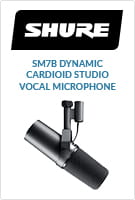
The SM7B is one of the better vocal microphones one can buy for a recording studio, home or pro. Its a dynamic microphone, based on a moving coil, and has a cardioid pattern. It picks up the sound it points to, and rejects sound from the sides and the back. While the SM7B looks like a "side address" mic, its not. You can set up the SM7B for both a boom stand or a standard stand. In both cases the Mic is set up horizontally and you speak and sing directly into the front of the windscreen. The SM7B comes with 2 windscreens. A thin one is on the mic as you take it out of the box and is good for most vocal uses. Shure provides a second thicker windscreen designed for close talk to protect against plosives and breath noise. They say in the manual this larger screen, the A7WS, "creates a warmer, more intimate sound".
Frequency responseI find the SM7B to be surprisingly crisp and clean sounding for a dynamic mic. This is due in part to the bass rolloff switch, which starts rolling off around 300HZ and is 10db down by 50HZ, and the presence boost, which kicks in from about 1-10k. The stated range is 50 to 20,000 Hz. With both the rolloff and boost switched in, the mic sounds quite open. When set to flat, the coloration disappears and I felt the Mic got cloudy. I'll be using mine with the rolloff and boost engaged.
Sound Pressure LevelThe SM7B can handle the loudest sounds your studio is likely to produce. Shure says it can take over 180db SPL and equates that to the sound of a space shuttle launch at close range. (140 db SPL is the accepted threshold of pain for the human ear), so the SM7B theoretically can go where your ear can't, like one inch from the bell of a trumpet playing a high note (155db SPL) Differences between the SM7, SM7a and SM7BThe SM7a introduced a Humbucking coil inside the Mic and they redesigned the mounting yoke. The SM7B simply added the larger windscreen. The SM7 Manual has a date of 1997, the SM7a manual was made in year 2000 and the SM7B's was printed in 2002. The SM7, like the SM57 and 58, are based on the Unidyne III capsule design. Shure says the capsule of the SM7 is similar, but not identical to the SM57/58. There is little doubt as to why the SM7B has been embraced by radio and TV stations. Its known to reject hum and interference from computer monitors, lighting, and electrical devices. That also makes it great for the home studio where music is often recorded in rooms with computer monitors and a range of electrical appliances sharing the electrical system. It is also a quiet microphone though it's not impervious to handling noise by any means. If you knock into the mic stand, you're going to get the thud. But with reasonable precautions, you could probably get away without a shock mount. Apparently Shure seems to think so as there is no shock mount available from them. My TestsI tested the SM7B was in my usual recording room with the door open to my two extremely loud computers. My LaCie Firewire drive woke up and was sounding like a mini chain saw in the next room. I plugged into my Great River ME1-NV and set the gain for a hefty 55db, which is just about right for me and the mic. I was surprised at how quiet the room ambience was, it was not even noticeable till a looped a spot where I was not making any noise and turned the central station knob up to 3pm. (This knob rarely goes higher than 8 am ever). Only then could I make out the humming and whirring of the computer fans outside the door. Those of you with compromised rooms, this mic is going to help you! Like other dynamic mics, the SM7B needs a fair amount of gain from your preamp. If you have a typical preamp with a throw of 0-60db, you'll be almost at the top much of the time. However, I have used this with some mediocre preamps as well. In fact, it was using an SM7B on an Alesis MultiMix firewire that convinced me to get one. A Good Mic for Hip Hop?I was surprised to read on Shure's site that they recommended the SM58 over the SM7B for those starting out in Hip Hop. I still can't believe that. The SM7B has much more clarity and presence. I tried the SM7B alongside an SM57 and found them complimentary, with the SM7 having more cut. In a hip hop situation, the SM7B goes to the main vocalist. Give the '57 to the guest. SM7B Compared to an RE20 and MD421
All three of these mics are about the same price and oddly I have them all and love them all! But there are some meaningful differences to me. Everybody's voice is different, so these impressions may not apply to your situations. I liked the sound of the SM7B best so far. Yet the RE20 seems to do better with controlling proximity effects when I get extremely close in. There is a mid-range openness to the SM7B when the boost is in. The RE20 is kind of a smooth, slick sound. Your ears may vary. The MD421 has a slight advantage of having a variable bass rolloff where the SM7B is fixed; the variable rolloff is good for times with instruments where you don't want to kill too much bass, but don't want it all there clouding things up. The MD421 is also lighter (so it can take a lighter stand) and more nimble in terms of placement. The heavier and wider diameter Shure SM7B is not a mic for a cheap lightweight stand. You don't want to see it do the head-first nose dive into your studio floor But even if it did, the Sm7b has a metal housing which gives one confidence. The MD421 is plastic.
Links
Threads
|
|
TweakHeadz Lab
Studio-Central
Audio-Pro-Central |