|
21 ways to Assemble a Home Recording RIGA Tour through the Diverse Home Studio
| |||||||||||||||||||||||||||||||||||||||||||||||||||
|
|
|
|
|
|
|
|
Emu Xboard 25 25-Key MIDI Controller
|
||
Its amazing how little it takes when you really get down to it. The cool thing about this rig is great sound in a tiny easy to set-up system. You can operate with a minimum of wires and use it on a laptop or a desktop. Because both the firebox and Xboard are bus powered, take along some phones and you could record on a road trip. Of course you want to make sure you have a high performing laptop with a fast hard disk, or just use it with you home firewire equipped desktop.
The studio projects B1 is currently winning our poll at studio-central for best condenser around $100.
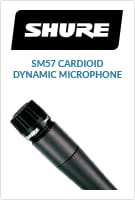
A quick note--beware of dynamic mics that require a lot of gain like the classic Shure SM57. You'll have to use the gain boost switch, which will add some noise. Condenser mics will be fine as they typically require less gain.
This system is upgradeable at any time. You can add premium Mic preamps better monitors and AD\DA converters when major cash comes in if you need to sound as professional as possible. But this system gets you off the ground with excellent sound.
Alternatives to the Firebox:
If you want to start a studio using Cakewalk's Sonar, consider using the new Cakewalk SONAR PowerStudio 660, which includes a Firewire audio interface. The monitors, mic, keyboard and headphones above will work fine with the PowerStudio.
As an alternative to the firebox for Mac systems, I recommend you substitute a MOTU Ultralite or a MOTU 8 pre. Yep, these will cost more. Remember now mmmmMac and mmmmMotu are good! That is a generalization. Its fairly safe when talking about MOTU's recent audio interfaces. Did I say PC? No I did not. (Be wary any time you find yourself, or a gear salesman, generalizing).
Another alternative if you are strapped for cash is the Presonus Inspire instead of the Firebox. I have detailed a rig for the Inspire in this article: how to build a budget studio. In fact, if you are into hip hop and sampling off vinyl, the Inspire saves you money as it includes on onboard phono preamp for your turntable. There is no MIDI i/o on the Inspire though so make sure you have a keyboard that has a built in USB midi interface. (See there is always a tradeoff!). There are also low cost USB 2.0 interfaces hitting the market, like the Tascam US122L and the Tascam US144. Other valid audio interfaces can be found on my comparison pages. Check out the Onyx Satellite (firewire) if you have a USB interface on your midi keyboard. Indeed, if you need to use dynamic mics, the Onyx will give that extra ooomph.
Now lets go to the higher end (but not the highest) in price.
Who its for:
Ideal for bands, the advanced home composer, synth studios and those who demand flexibility and superb quality to do whatever they want.
Hooking up this Rig:
Note that with the Onyx 1640, unless you want to use a different audio interface, you need to have the optional firewire card that installs in the mixer. Once you have that in place, its just a simple firewire cable to the computer. Your monitors will go on the Onyx control room outs, your mics will go to the onyx preamps (and you can connect and record 16 of them if you want). The M3 in our example above would have its audio outs connected to the onyx line inputs. For midi the M3 could connect by USB, However, remember the Onyx has no MIDI i/o so if you want to use older synths you need a MIDI interface. That is where MOTU midi express 128 (or other) MIDI interface comes in. It just connects to a USB port. You connect all your 5-pin Standard MIDI cables to it. Your sequencer will see all those MOTU midi ins and outs and all the audio ins an outs of the Onyx. Pretty amazingly simple for a huge system that can do full bands! The rest you do with the mouse inside the application.
|
|
|
|
||||
Choice of Mac/PC Sequencer (if going with the iMac try Logic Pro)Apple Logic Pro studio (Macintosh) or Cubase or Sonar on the PC |
|
|
||||
Add a pro touch witha Great River ME1-NV Mic preamp and an AKG c414 Large condenser |
|
Akai MPD24 USB/MIDI Pad Controller |
||||
BLUE
Baby Bottle Studio Condenser Microphone with Case
|
|
Shure
SM81LC Cardioid Condenser Microphone
|
This is not a budget rig, but one of extraordinary sonic fidelity, amazing flexibility, and in all pure class! Of course it costs about 6 times the Firebox Rig, but you get capability and the flexibility to do lots more things.
By adding the Firewire i/o card to the Mackie Onyx 1640, you can do away with the soundcard and audio interface and get more inputs and a very nice analog mixer with nice preamps. Connect to your computer with a single firewire cable. The advantage of this system is that it is flexible. You can use external gear as well as the software instruments in your sequencer. It is also a great rig for bands and drummers, who need to connect several mics and want to record several tracks in one pass to the sequencer. With the Onyx 1640, you can record 16 mics at once if you need them.
The Dynaudio BM5a or BM6a MkII is an outstanding choice for a nearfield monitor. Another possibility would be a Mackie HR 624 or 824Mk2.
I selected the Korg M3 for its sheer sonic inventiveness with the Karma II processing inside. But any keyboard, even a soundless controller will work here, because Logic has all the soft synths you will need inside. An alternative hi end synth is the Yamaha S90ES, which has the entire Motif Soundset and a fantastic piano. This is the choice for someone who wants the full 88 keys. I've selected the MOTU MIDI Express 128 to give you plenty if MIDI ins and outs for connecting external gear. Add your entire rack of MIDI modules and effects from years past. As a nice touch, I add an MPD24. Its keeps with the small footprint, but gives those big MPC style drum pads popularized by hip hop beat makers.
A computer with Firewire is required. This gear will
work with PCs or Macs, but I suggest a late model Mac, like the iMac pictured
above and
Logic Studio,
or a fast Dell or HP and Cubase.
It will give the studio a small footprint with the capability of doing very large
projects, just right for many rooms we have in our homes. Add the mics you
need and you have a extremely classy rig that you will enjoy for years.
On the Cheap
The super inexpensive way to get most of the capabilities of this type
of rig is to substitute an
Alesis
MultiMix 12 Firewire instead of the Onyx and a keyboard like the
Yamaha MM6
instead of the M3.
Who its for:
Ideal for solo composers and small ensembles, especially for those with old computers and little cash. You can record up to two tracks at once easily.
Hooking it up:
With a desktop computer just take the alt 3-4 outs of the Xenyx and connect them to the 2496 line in jacks. The 2496 line out jacks can go back to any 2 unused line inputs on the Xenyx, such as the Tape ins or 2 unused channels. The keyboard's audio outs have to go to the mixer's line inputs plus MIDI must also be connected, in and out, to the 2496 breakout cable. Mics, of course, go into the XLR mic preamps on the mixer. Active Monitors go on the mixer's control room outs. If you are using the passive monitors I listed, then you connect the control room outs to your stereo amp or receiver. See our member nmodi's setup pic of the UB1204 connections.
|
|
AKG Perception 100
|
|
|
|
![]() Just add a desktop computer, even this one! But if your computer looks like this best to slow down on those plugins, Jack! |
|
|
|
|
|
The advantage of this system is low cost for high performance. The M-Audio 2496 has well-tweaked fast drivers that put it ahead of consumer cards. It can do software synths quite well and with low latencies. It also has a MIDI port, which is a money saver as you don't need a midi interface. Its also been around a long time so it's compatible with a wide range of computers, new and not so new.
The Behringer XENYX 1204 has the ALT 3-4 bus which makes it a breeze to send any channel (or channels) of the mixer to the soundcard while you monitor the other channels--great for recording. The mic preamps are good and "airy" which will give your vocals a crisp sound. You can add condenser mics to this system. Though it's not a condenser, I include the Shure SM57 here for it's low cost and the fact that it can record almost anything. This is the most popular recording studio mic in the world. I have chosen the AKG Perception as a good all around condenser mic, which has a crisp sound and is good for both vocals and acoustic guitars. The system will record electric guitar plugged in direct, but you can improve the sound considerably by adding a simple direct box like the Behringer DI-100.
Any keyboard with a MIDI out will work if you are just controlling soft synths and samplers. I picked the Yamaha MM6 due to its low cost and that it has sounds of its own. I think its great for electronica, hip hop and RnB. For a little more look at the Korg X-50, which is smooth and ambient. Also Consider the Juno D by Roland. By using a hardware synth you don't have to always use cpu-intensive softsynths on every track. Working this way, this system can get good results even on older, average desktop PCs. A strength of this system is its ability to add hardware like synth modules, a compressor, hardware effects boxes and up to 4 mics.
To keep the cost down I included a passive speaker system as most people do have a hi fi receiver they can use. The Alesis Monitor One is really a value. Before active monitors hit the world many studios used these as their nearfield monitors. Active Monitors will also work with this system.
This rig can be extended in many ways. A DJ would want to add a phono preamp so they could connect their turntables. Hip hop beat makers would to well to add the inexpensive MPD16 which will work great with the MM6 drum kits (which are excellent for hip hop and electronica).
Working with a low grade laptop? No prob. Take
the soundcard off the list and plug the alt 3-4 out of the Xenyx directly to the
audio line input and take the line output back to the Tape in. Or, if you
want you can use the USB interface that comes with the Xenyx, which allows you to
use the Xenyx as your audio interface. Because this system has a hardware mixer
and hardware midi synth you'll have no latency like all the mixerless dudes have.
The drawback of this rig is that you have a maximum of 2 tracks that can be recorded
at one time using analog inputs. Its not for jamming or big sessions.
But for you and a friend working together it will work.
You're going to hear a lot of people slam this rig due to the inexpensive mixer.
I can tell you I have used every piece in that rig and have got excellent sound.
Who it is For:
Ideal for the Mac based home composer who want a completely software driven studio for electronica, film scores, small ensembles and other big projects with a minimum of hardware and wires.
Hookup example:
Simple really. The 828mk2 hooks up to your Mac's firewire port (1 cable). The new Mackie Control Pro will take a USB port. You mics, synths, and monitors connect to the MOTU. You can plug a guitar into the MOTU's combo jack input (2) and flick the switch to instrument. If you want to connect turntables you will need a separate phono preamp and connect that to any pair of MOTU line inputs.
|
|
|
|
|
|
|
|
|
|
|
|
Tweak's Standard Classic Mic PicksRode NT2a (or alternate Large condenser)
Shure
SM81 (or alternate small condenser)
|
|
|
Sony MD7506 Headphones orHeadphones of choice |
The Mac Pro is now the standard for Mac based studios. One great thing about them is you can connect many video monitors and hard drives to the system, ensuring a maximum of eye candy (consider three--or four!-- 23" monitors side by side--awesome!) and enough storage options to store years and years of projects. As today's Macs are using Intel Core 2 Duo processors make sure that any 3rd party products you intend to use are up to speed. Software must have the "Universal" logo on them. The MOTU devices already compatible with the Intel Macs. MOTU interfaces and Apple computers have a great history of compatibility. Logic, of course, is Universal. NI's Komplete bundle has updated nearly all of its new synths to Universal Binary as of this writing. Wait till you hear the FM8, Akoustik Piano, Absynth4, Reaktor5 and other heavy soft synths on a system that can slice through them easily.
Logic pro is my preferred way to go here, though you could run Digital Performer 4 or run Pro Tools LE (if you get an digi 002 system). The MOTU 828mk3 is a super value as an interface with preamps, 10x10 analog i/o and ADAT lightpipe i/o. If you need 8 preamps, go with the MOTU 8 pre. If you are on a Mac you really can't go wrong with a MOTU interface. Just make sure it has the preamps and i/o you need. RME's Fireface makes an excellent higher-end alternative. Add the Mackie Control as a control surface if you want hardware to control your software mixer. Mackie control software was developed with Emagic (the company that originally made Logic) and it fits Logic like a glove.
Waves and Native Instruments fully support Apple's Core Audio. The Komplete5 gives you nearly all the great NI softsynths and soft samplers to augment Logic's impressive array. Waves Platinum is used by the pros. Note that the latest Macs are PCIe based. If you want to go with UAD-1 systems for plugins, make sure to get the PCIe version of the UAD-1 card, which is available now. I personally prefer the sound of the Universal Audio plugins.
A MacPro desktop system is not cheap, but you already knew that. Any MIDI keyboard will work, but I am a believer that you need at least one device that makes sounds outside of software. But its not necessary to get a full keyboard "workstation". If you get Logic and Komplete 4 you will have plenty of samplers. A Yamaha S90ES, with its 88keys, would really be the dream keyboard for the dream rig.
You can add an external processor to the MOTU 828mk2 via its hardware sends on the back. You can also add more MOTU interfaces or get an ADAT 8x8 AD/DA to extend this system to 18 analog i/o if you are interfacing a hardware analog mixer or a lot of hardware processors. One way to do this is to add a MOTU 8-Pre to the 828mk2. You can also add more preamps to the 828mk2 using the ADAT protocol, for example, with a Focusrite Octopre LE and ADAT card or a Presonus DigiMAX FS or a Mackie Onyx 800R.
But you don't need a mixer with this system. Inside Logic you can make as many mixer channels as you want and with the Power of the Mac Pro you can add processors and softsynths thinking only of their artistic merits, and not on how much CPU power you have left. Its truly a rig for the creative professional.
Go to the Previous Page
This page is updated every few months
|
TweakHeadz Lab
Studio-Central
Audio-Pro-Central |