Guitar | Bass | Keyboard | Microphones | Mixers | Audio Interfaces | Monitors | Sequencers | Soft Synths | Live Sound | Drums | Club  | Accessories | Blowouts
home shop at zzounds!

Guide | Rigs | Forums | Reviews | Bookstore | Jukebox | BlogsSearch 

Tweak's Guide 
to Recording
       Success

Introduction
For Noobs
MIDI Basics
Audio Basics
Studio Rigs
Studio Pics
Past Studios
Signal Flow
System Guide
Mac vs. PC
Audio Interfaces
Installation
Buying Gear 
Writing Music
Inspiration
Recorders
Keyboards
Controllers
CC Events
MIDI Routing
Mixers
Understanding your Mixer
Digital Mixers
Analog Mixers
Mixer Hookup
Control Surface
Microphones
Mic Preamps
Converters
Monitors
MIDI Modules
Effects
Sequencers
VSTi, DXi, RTAS, AU
Soft Samplers
Soft Synths 
Audio Plugins
Synth Prg Tips
MIDI to Audio
Cables
Studio Setup
Room Acoustics
War on Hum
Quiet Room
Dual Monitors
DJ studio
Networking
16 vs 24 bit
Timecode
Build a DAW
Tracking 
Record Vocal
Session Tips
Vocal Editing
Using EQ
Harmonizers
Guitar Tracks
Guitar Tone
Drum Tips
Drum Patterns
Hip Hop Beats
Cymbals
Sampling
Samplers
Compressors
Pan, Vol, FX
Mixing 101
Mix Methods
Mastering
Surround
Audio for Film
Podcasting
Publishing
Congratulations!
Final Exam
 
Reviews
Forums
 
JukeBox
Guitar Gallery
 
Store Links
Recording

Multitrack Recorders
Microphones
Mixers
Signal Processors
Monitors
Accessories
Studio Racks

Computer Music

Audio Interfaces
PCI
USB
Firewire
Computers
Software
Sequencers
Soft Synths/Samplers
Plugins and FX
MIDI Interfaces
Control Surfaces
DSP Cards

 Keyboards

Keyboard Synths
Samplers
Keyboard Accessories
MIDI Modules
Groove Boxes
Sounds
Keyboard Controllers
Keyboard Amps
Expansion Boards

 
Guitars, Amps,
and Effects

Electric Guitars
Guitar Effects
Guitar Amps
Acoustic Guitars
Accessories
Classical Guitars
Folk

 
Drums

Electronic
Acoustic
Drum Machines
Drum Hardware
Cymbals
Accessories
Other Drums

Accessories

Cables
Bass Guitars,
Live Sound/PA
DJ


21 ways to assemble a home recording RIG


Page 6    
 1   2   3   4   5   6

A Tour through the Diverse Home Studio options available Today


Rig #19 Acoustic/Electric Songwriter's Studio


Who it is for:

Multi track recorders are great for recording bands, jam sessions, even gigs if you get one with enough preamps and i/o.  The smaller ones make great songwriter's tools, particularly for guitarists who don't want to mess with a computer.

Hooking it up:

The two MTRs shown below have all the connections you need right on the unit.  Both have USB ports for connecting to a computer for transferring files if you want.  Guitars, keyboards and Monitors connect directly to the unit.

Yamaha AW1600 16-Track Hard Disk Recorder  or
Studio Projects C1 Large Diaphragm Condenser Microphone
 
or Rode NT2A Variable Pattern Studio Condenser Microphone
Korg D3200 32-Track Hard Disk Recording Workstation
 
 
Shure SM81LC Cardioid Condenser Microphone
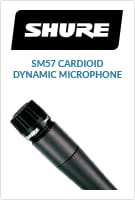
and Shure SM57 Cardioid Dynamic Microphone
 
Headphones of choice
KRK RP8G2 Rokit Powered 2-Way Active Monitor or Suitable studio monitors


The days of tape are gone now, perhaps forever.  It's a digital world of computers as you have seen above. Yet many of us don't want the burden of hooking up a computer every time we want to record in out living rooms.  Hence, multi-track recorders are more popular than ever and over the past few years they have dramatically increased in power and flexibility.  The 2 multi-track recorders I list above have hard drives, and with the Roland shown above you can add a mouse and computer monitor.  The huge advantage here is it can go where you want to record--great for bands, setting up a jam session at a friends house, on location at a gig, or best of all, on the kitchen table where you can edit and tweak down a master recording with the only cable being a set of headphones.  Or grab your guitar and a your notebook of lyrics and go to it, without the distractions of computer issues redirecting you. 

Other than microphones and studio monitors there is not a lot more to buy later, unless you want to interface with computers and larger mixers.  The units come with good FX units built in and the Roland's are developing their own add-on effects cards.  I like that these units help keep the focus on music, that is a very important feature in itself.  Another interesting multi-track option is the Korg D3200

See my article on what to watch out for when getting a multi-track


Rig #20 It's got to be simple keyboard/guitar/vocal/Studio--No Computer!


Tascam DP01FX 8 track This one
RODE NT1A Studio Condenser Microphone with Shock Mount
or this one
Korg D888 8-Track Hard Disk Recorder
KRK RP5G2 Rokit Powered 2-Way Active Monitor or monitors of choice
Headphones of choice


The nice thing about these units is that they have much of what home recordists want in an easy to deal with format. There's a built in 40 GB drive, effects, XLR mic inputs--with phantom power--so you can use nice condenser mics.  Thanks to S/PDIF and USB 2.0 you can export tracks to a computer if you want.  Nice for recording somewhere else in the house then editing later. The Korg is a bit newer and I like the no nonsense design on both.  None of that data compression going on here.  In the end, you get CD quality 16 bit/44.1 recordings on either. 

I choose the KRK RP5 again because for the money, they are hard to beat.  For Mics there are of course many options, but if I had to go with one, the NT1a will excel at vocals and acoustic guitars. 

I mean a simpler studio:  Removable Media MultiTracks

Fostex MR8 MKII 8-Track Digital Recorder

The MR8 is a good way to get started for a guitarist/songwriter.  Has 2 XLR mic inputs with phantom power.  I suggest getting a Studio projects B1 mic or a Rode NT1a and a pair of KRK RP5s for studio monitors. 

Zoom H4 Handy Recorder

The Zoom H4 has a 4 track mode.  You can actually carry this recorder with you and hum the parts of your next magnum opus as you stroll through park on a lunch break.  Built in condenser mics will record in full fidelity.  You can record at 24bit/96khz if you need to or at MP3 economical bitrates.  Naturally its great for sampling stuff for your samplers at the studio.  There are more removable media digital multitrack recorders.  Check out some new models


Rig #21 I mean even simpler than "digital" studio

Who it is for:

People that just want to get the idea down and don't give a flip whether it sounds like it was recorded in a studio.  In fact they may want it to sound like it was done at home. These people are into an old school gestalt.

Hooking it up:

OK, it does not get simpler than this.  You stick a tape in, plug something in to record and press a few buttons and it works.  A great song on tape will still win more hearts than an average song done in Pro Tools HD.  Hook it up to your stereo and have some fun.   If you want to record with a XLR studio mic with these you can, but you'll have to get a mic preamp. 


Fostex X-12 or Tascam MFP01 or the Tascam Porta 02 Four track cassette studios

M-Audio Nova Condenser Microphone

ART Tube MP Studio Microphone Preamp


Shure SM57 Cardioid Dynamic Microphone


Add the monitors of your choice
For a passive system, consider
Alesis Monitor One MK2 Studio Monitors

Headphones of choice


Rig Accessories Audio for Video Podcast Add-ons

Tascam HDP2 Hi-Res Portable Stereo Recorder

see more Lavalier mic systems


Getting good sound on a video shoot is a lot different than getting good sound in a recording studio, though all the same principles apply.  The hard part is that the talent tends to move around and the mics and recorder must follow. Of course you can use the built in microphone on your camera, but often times we want better quality.

The Tascam HDP2 is a great new 2 track "on location" recorder with many features that the podcast maker wants.  It records at 16 or 24 bit at all the popular sample rates, and can sync via SMPTE.  With preamps with phantom power, you can use a variety of mics.  By getting in close with shotgun and wireless lavalier mics, you can get the clean sound like you hear in professional productions, and minimize the problems of too much overbearing environmental noise.  Back in the studio, the broadcast wave files made on the HDP2 will export through firewire direct to your DAW and its audio video software.  Because the files are time stamped, you can line them up in perfect sync with the video frames.  This lets you take your audio-for-video to the next level. 


Finishing Up this section


Hope that helps a bit to give you a sense of how many different products fit into the overall scheme of things.  Of course you can mix and match many items and substitute the ones I have shown with higher and lesser quality items. There's many ways to do it right, but many more ways to do it wrong. My hope is that I have helped you find the combination that works for you.
 

Happy Configs to your rigs!

Tweak


Want to Discuss this topic?  Go to the CONFIGURING your RIG Forum


This article is constantly being updated

Page  6     1   2   3   4   5   6

Go to the NEXT PAGE

next page

Go to the Previous Page

Cool Quote:

"I have learned that there lies dormant in the souls of all men a penchant for some particular musical instrument, and an unsuspected yearning to learn to play on it, that are bound to wake up and demand attention some day."

 Mark Twain


TweakHeadz Lab | Studio-Central | Audio-Pro-Central | zZounds and online store Affiliations | Site Map | Support the Lab | Privacy Policy | ©2008 TweakHeadz.com